Here is what we have: a young woman in her early 30s who has built a career in international media, working with the coolest team ever, having a bunch of friends, hobbies, and almost steady psychotherapy. What on earth could have ever gone wrong?
Yet, it did — at some point.
Yes, I am talking about myself. And this is the story of how I failed work-life balance, and how I started (work in progress) to restore myself and take my life — and my schedule — under control.
I first came to work in media almost 10 years ago. At that time, I started as an intern, climbing my career ladder steadily. When you are in your 20s, you don't really think about how much energy you actually have. It is easy to get up early (though for me — a persistent owl — it has always been a personal torture), go to the office, slide away to university after lunch, come back at 4 pm, grab a quick dinner with your friends, and then open your laptop once again, staying up until whatever hour.
Working in media meant one thing to me: you had to be online 24/7, stay tuned to everything happening in the world, and even if you were writing about Paris Fashion Week, you had to keep in mind politics, economics, show business, the latest music releases, film premieres, and gossip from the yellow pages. I was literally living in the office, sitting at the desk for 10 hours in a row, eating god knows what, and still going to parties to network and “unwind.”
And then came COVID. Suddenly I realised that life could have a different rhythm. We still worked hard — no pandemic could stop the internet — but I started to find time for my family, and for myself. I began to feel things again. And guess what? I felt incredibly exhausted.
Yes, the worst thing is that if you have built a machine out of yourself, you can't simply get away with it. The healing process is never meditation under a rainbow. It is painful. It is exhausting. Because all that tiredness hasn't gone anywhere; it stayed inside you. And to let it go, you must get through it first.
I tried. But instead of being honest with myself, I pushed even harder.
When I quit my first job, I felt relief for a few days. It was nice. I still remember one afternoon when I took my lunch outside, to a park. For some people, it was an ordinary Tuesday, but for me, it was a miracle: you could be outside, having nothing to do, nowhere to go. That is how I realised I was not coming back to the office. Ever.
The unemployed honeymoon didn't last long. After about a week came the anxiety, and it screamed. It screamed of poverty. It screamed of uselessness. It screamed that my life without a job had no purpose.
So, therapy — right? The best way to overcome anxiety? Not so fast. Anxiety had other plans. It whispered: “How can we spend money on talking to a stranger who will just tell you your parents did it all wrong? We need to earn money.” But then it added, “We are also too unprofessional to do so.”
That is how I started saying yes to every possible project. I took on jobs I disliked, wrote articles I procrastinated on, and blamed myself for laziness — while it was, in fact, about taking the wrong paths. Once, I even ghosted a business partner (yes, really), and I still feel guilty about it four years later.
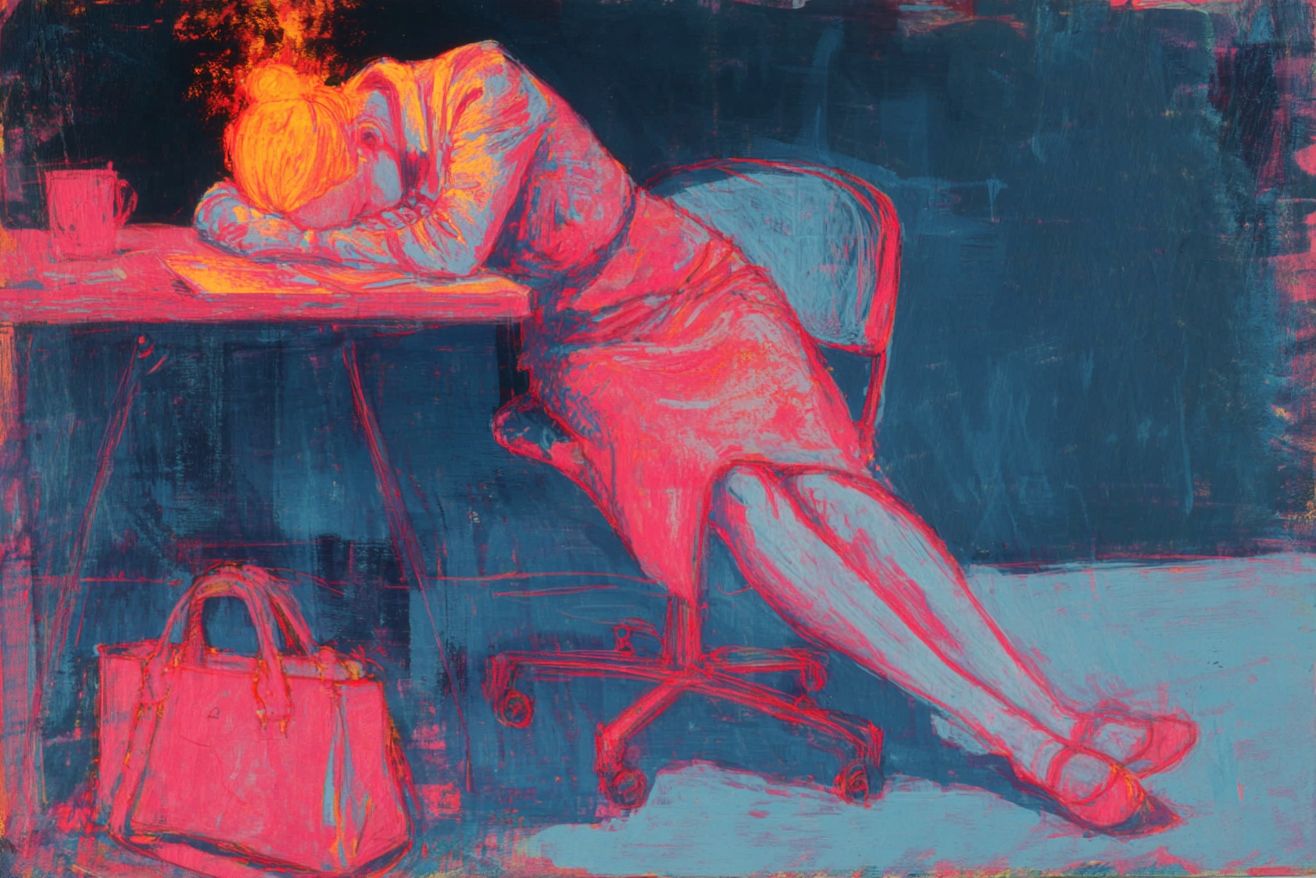
But I kept taking everything that came my way, not noticing what was approaching. Enter: burnout.
Imagine having two jobs (yes, that delightful perk of remote work — you can take on more jobs!), studying at film school, practising physical theatre, and managing an active social life. And somehow, you find none of it interesting.
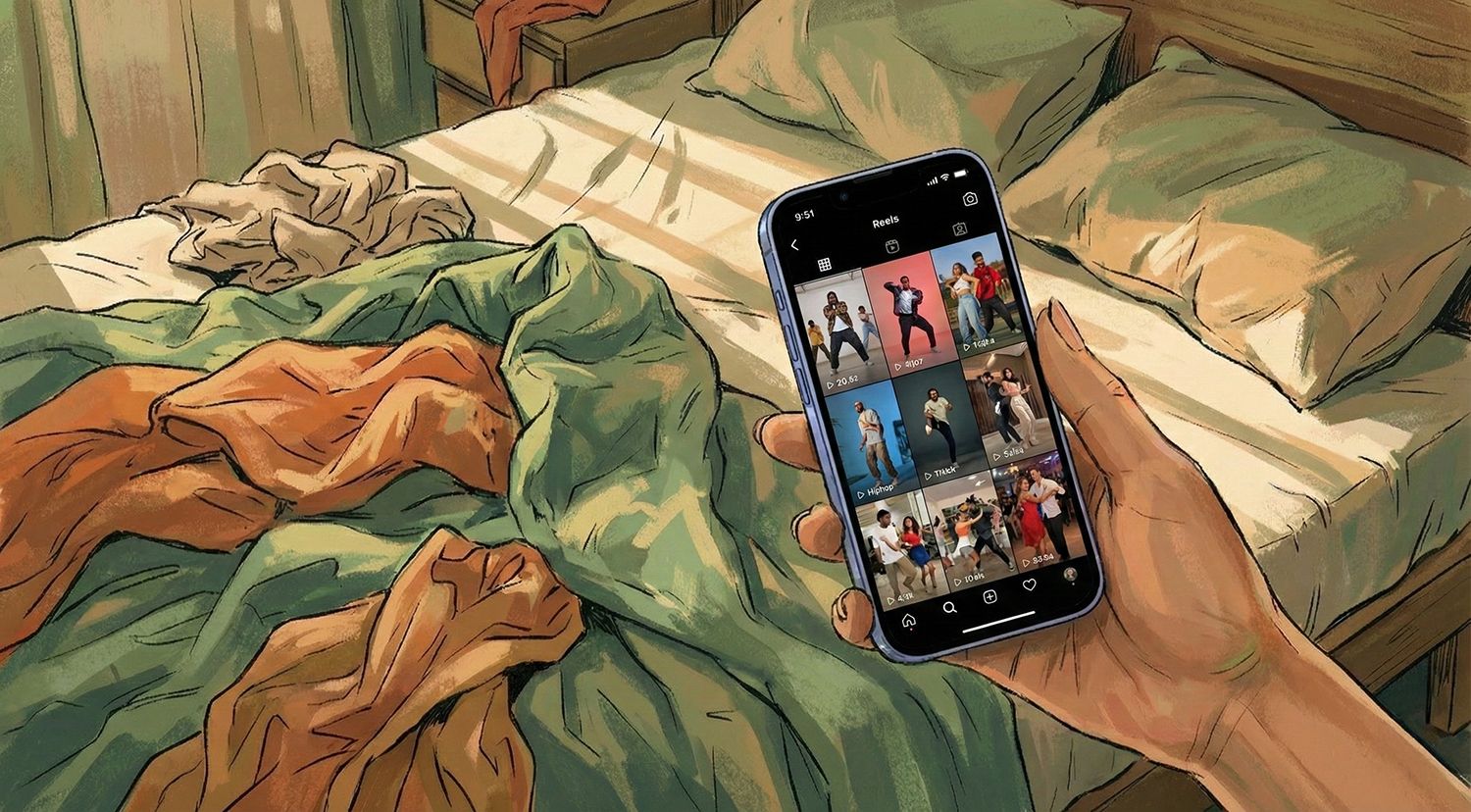
You wake up exhausted, drag yourself through the day, and then find yourself scrolling Reels until 2 am. Nothing brings joy. The only thing you want is escape — from the reality you have created with your own hands. To run away and hide under the sheets. To talk to no one, think of nothing.
Your mind can't process it any longer, yet your anxiety keeps whispering that you haven't done enough to deserve rest.
It is a horrible feeling. If you have good imagination, picture yourself in a dark corner surrounded by dementors, draining your energy, while you are too weak to lift your wand and summon a Patronus.
That is why therapy becomes not just a good idea but an absolute must. Even if you are self-aware enough to understand what is happening, trust me — this isn't a place to get out of on your own. Step zero is to make sure you aren't alone. Get support from your partner, your family, or your friends.
But therapy is better, for one simple reason: it is the one space where the focus is truly on you.
So yes, I ended up sitting in a chair in front of a person whom I decided to trust — for money. And suddenly, he wasn't pitying me or agreeing that my life was hard. He wasn't even suggesting I grab a one-way ticket to another continent to “find myself.”
I was frustrated. I wanted someone to protect me from the dementors.
And that is when he pointed out something unpleasantly accurate: I had created those monsters myself. I was responsible for the powerless girl in the corner.
Taking responsibility isn't easy. It is as uncomfortable as giving yourself rest after years of constant work. You stop running, you stop hiding, and you face the void head-on, saying, “Yes, it was me.”
My fears were quite classic: drowning in debts, having nothing to eat, moving back to my parents’ house at the age of 30. Failing as a professional (hello, impostor syndrome). Losing interest in everything forever.
What helped was diving into those fears, imagining the worst-case scenarios, and slowly realising that there was always a way out. Some of those scenarios were so ridiculous that I couldn't help but laugh. And laughter is healing — because it allows you to take life a little less seriously.
Then come the boundaries. You don't have to reply at 10 pm — boom, no one will die. You have the right to miss something — boom, you are human. You don't have to check emails on holiday — boom again. And the most important one — you can say no to whatever you don't like.
These rules are simple, and they are everywhere, but you need to live through quite a bit before you can truly apply them. The paradox is that you have to fight impostor syndrome and an overinflated ego at the same time, because they are basically the same thing.
One moment I thought I was terrible at my job, and the next I was working through girls’ dinner because “no one else can do it but me.” Looking back, it sounds absurd — but it really happened. And if any of this sounds familiar, trust me, I have been there.
I won't lie — it takes time. But when you take responsibility, you begin to create your own universe — one that you actually like. It has nothing to do with manifesting or spiritual practices. It is much simpler: you set up rules, you follow them, and the world adjusts around you. Because it was never the world that burned you out — it was you.
And she lived happily ever after?
I would love to say that once you set boundaries, it is all unicorns and rainbows, but it isn't. I still learn to be persistent, sincere, and... flexible — because life happens. Tight deadlines, crazy clients, urgent emails — they never go away.
Here are the things that help me keep my work–life balance... well, working:
- Don't do things that don't spark you
- Take regular holidays
- Schedule life around work, not the other way round
- Explore your energy cycles
- Set yourself a bare minimum
- Make regular reality checks
- Don't keep your emotions inside
It took me years to build some kind of balance, and it still isn't perfect. Sometimes I slip back into old patterns. When that happens, I stop, take a breath, and ask myself: Is there really nothing else in the world I could focus on, that I choose to focus on work problems instead?
Quite often, I realise there is plenty more — things that matter far more than stress and emails. Work becomes just a shield not to look deeper.
Be sincere, take pauses, and one day you will finally say: “It is just work. It doesn't need that much energy.”
And maybe, just maybe, you will switch your laptop off at 6 pm.