11 Dec 2025
Have you ever dreamt of owning a horse? One with a white mane and a brilliant name like Spark or Storm (I would call mine Maximus — and all the Disney lovers will know exactly why). Maybe the idea crossed your mind once or twice, but then reality stepped in: the assumption that you would need a huge villa with a field, plus an extra pair of hands to look after the horse when you can’t. And the cost? 10,000 AED? Perhaps even 20,000 AED a month?
But what if I told you that prices actually start from around 3,000 AED — and that this doesn’t just cover a place for your horse to live, but proper day-to-day care as well? Surprisingly manageable, right? So what is included at that price point, what do the more premium options offer, and where do you even begin to look for a horse if keeping one suddenly feels within reach? Let’s break it all down below.
The article ended up far more numbers-heavy than expected — but at least now you know exactly what to expect and how to budget.
How much does a horse cost?
The first thing to ask yourself when buying a horse is: what do I actually need it for? Is it for leisurely rides through the desert or do you want something sturdy enough for mountain trails? Should it already be well-trained, or are you looking for a racing prospect?
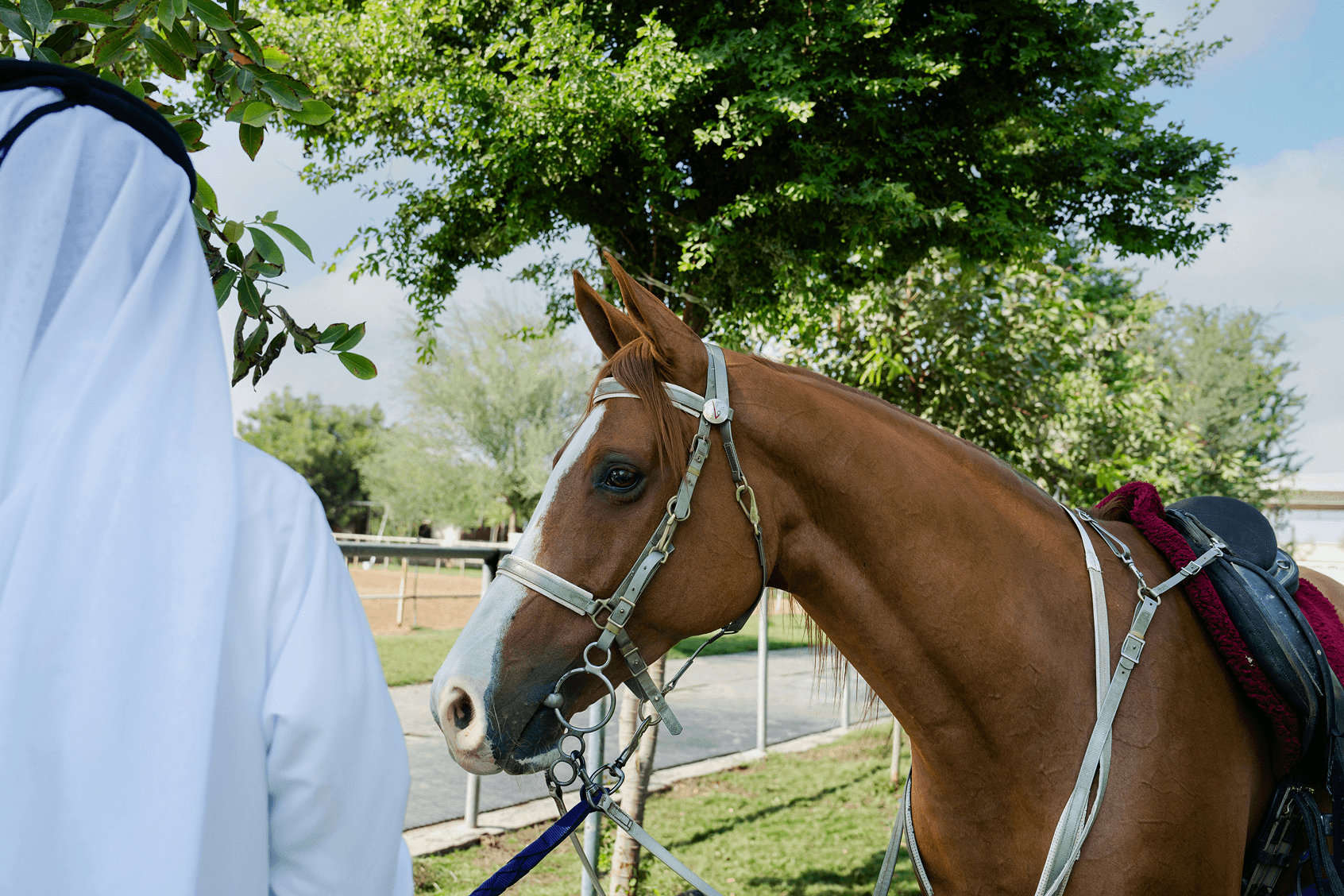
When it comes to price, horses usually start at around 3,000 to 5,000 AED. In that range, you are typically looking at an older, trained riding horse — ideal if you are a beginner and don’t expect anything too specialised. Surprisingly, younger horses can sometimes be even cheaper, as the real expense comes from training, which is what truly adds up over time. A reliable, middle-aged horse usually costs around 15,000 AED, while a well-trained middle-aged one might range from AED 20,000 to 25,000.
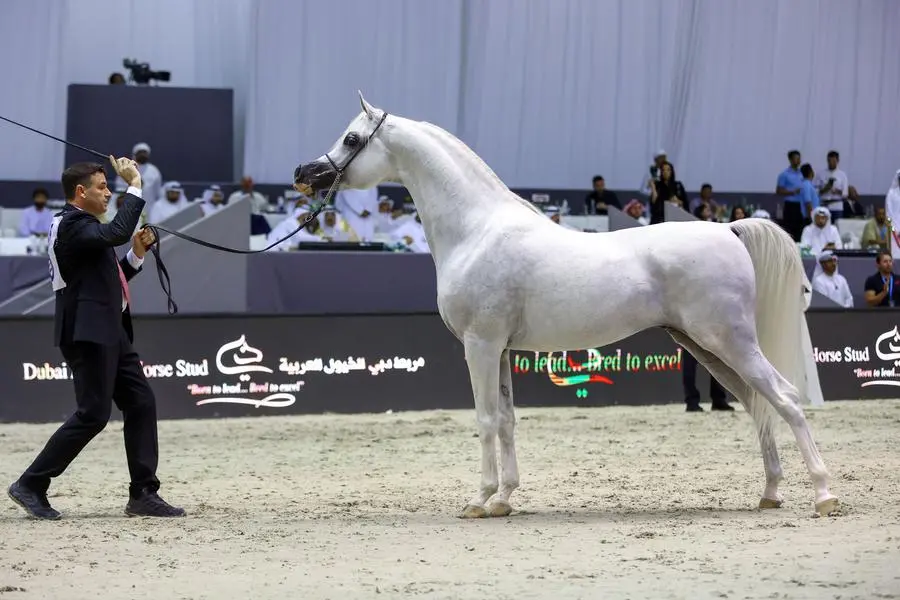
Horses trained for competition, however, are in a different league — prices can climb to almost anything. A decent show jumper, for instance, might cost 50,000 to 80,000 AED, and racing horses can reach 200,000 AED or more, depending on pedigree and performance.
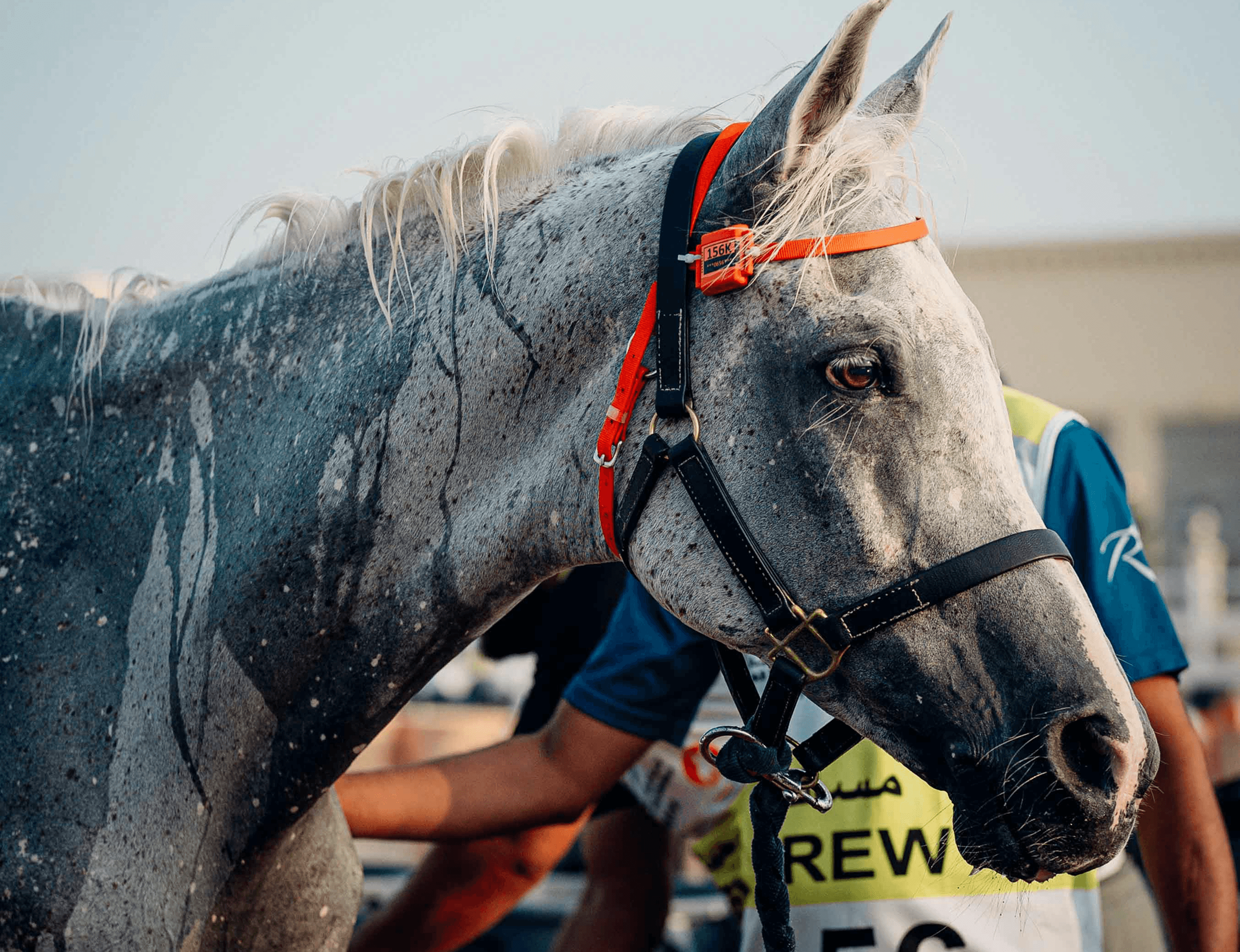
Another interesting category in the UAE is endurance riding — a sport where horses cover long distances (up to 160 kilometres) across natural terrain, and one that is particularly popular among Emiratis. Horses suited for endurance are considered a class of their own, and they are priced accordingly. A proven endurance horse (meaning the one that has completed official rides and passed vet checks, often with a record from the Emirates Equestrian Federation) — can cost 50,000 to 80,000 AED. An unproven prospect, still in training or yet to compete, might range from 40,000 to 60,000 AED.
Where to buy a horse in the UAE?
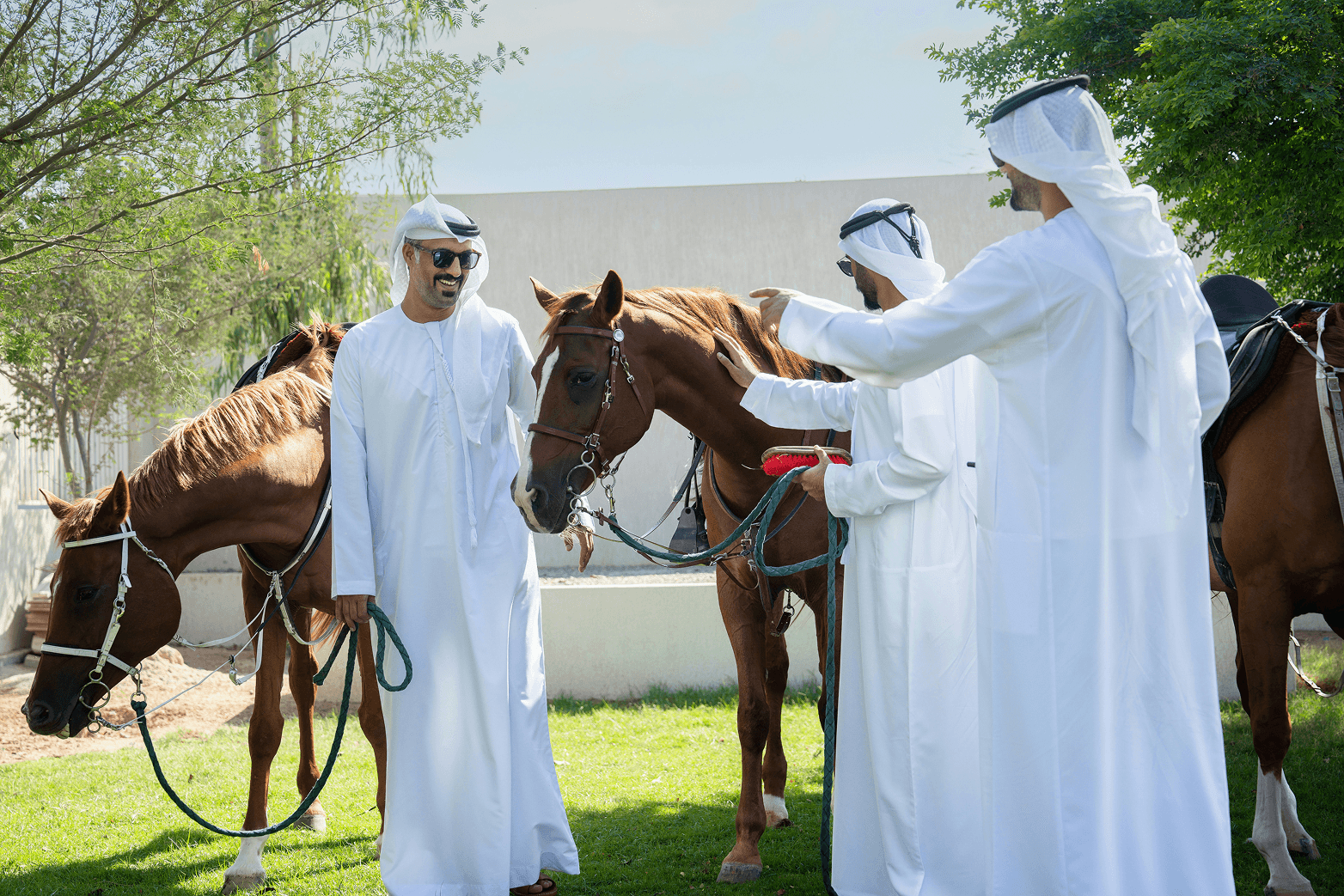
While horse ownership is a deeply rooted tradition in the UAE, demand is largely driven by Emiratis, followed by Arab expats. Overall, however, ownership isn’t particularly widespread — many people who don’t ride regularly simply book a session at a local stable a few hours in advance. Most stables are even happy to provide you with your favourite horse (regular riders usually have one).
But if the idea of owning a horse has begun to take hold, there are a few routes you can explore.
Important note: Wherever you buy from, the seller should at the very least provide proper veterinary records and, ideally, some information about the horse’s training background.
- Private stables and riding clubs.
- Online platforms.
- Local breeders and studs.
- Importing a horse.
Keeping a horse in a stable — how much does it cost?
Owning a horse means giving it a proper place to live, and while that may sound straightforward, the prices vary widely depending on the level of care you are looking for. In the UAE, the costs generally fall into three main categories:
- Private stable rental
Typically 1,500–3,000 AED per month. This is the most basic option, usually offering just the physical stable space. Feed and daily care are either limited or charged separately. If you buy feed yourself, expect to spend around 500–800 AED a month, with supplements adding another 200–1,000 AED depending on the vet’s recommendations and the horse’s age.
- Commercial full livery
Usually 3,000–5,500 AED per month. This includes everything you need: feed and hay, bedding, daily muck-out, turnout, and a shared groom who handles feeding and basic cleaning.
- Riding club livery
Around 3,000–4,000 AED per month. Similar to full livery, but the facilities tend to be more polished — often with benefits such as air-conditioned stables or better riding arenas. The spaces, however, are usually more limited, and it isn’t always easy to secure a spot.
And here is the twist: on paper, the maths looks simple. You invest 5,000–10,000 AED upfront to buy a horse (honestly, less than many spend on a bike here), and then around 4,000 AED a month on care. It sounds manageable — almost like a good deal.
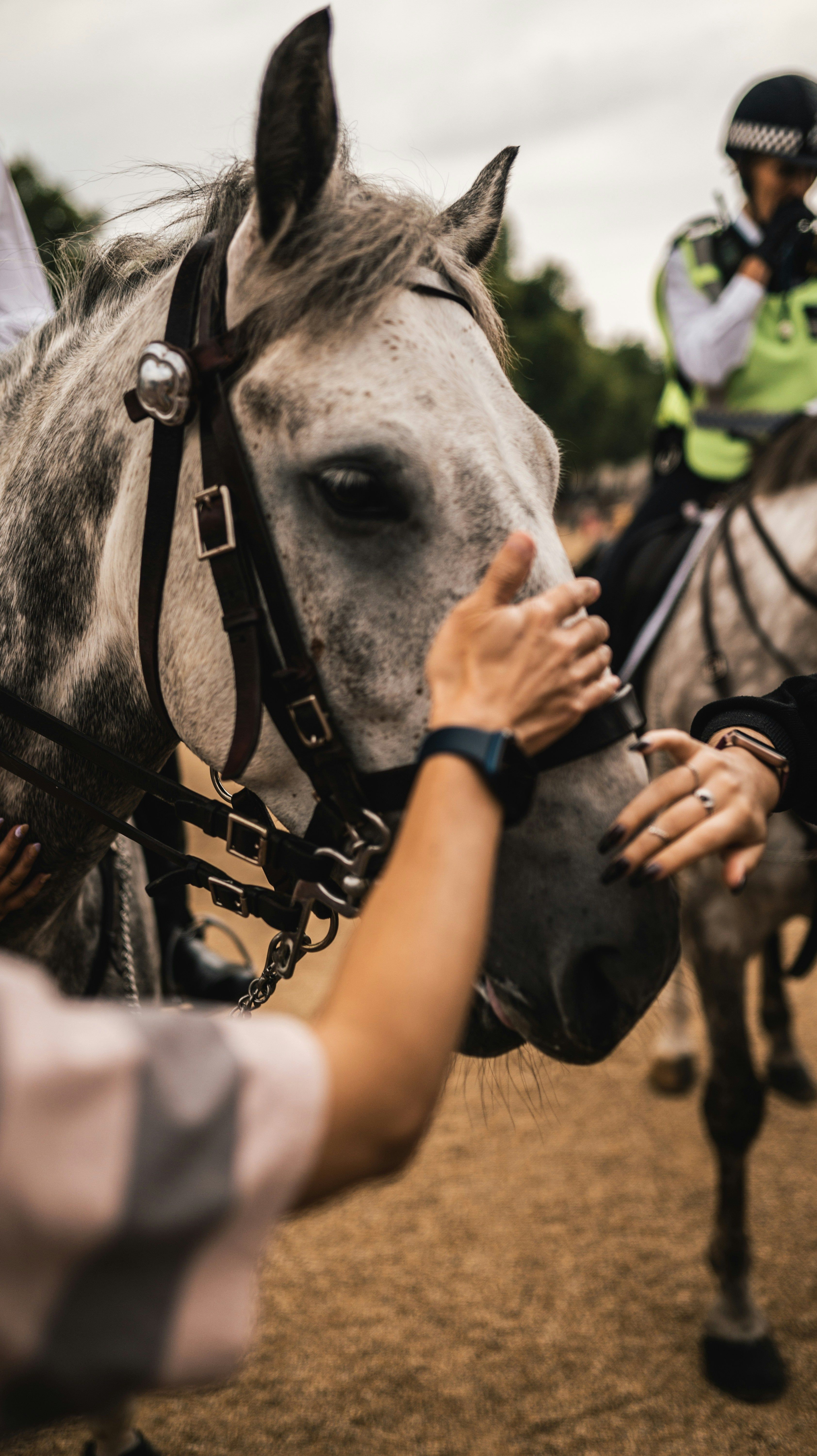
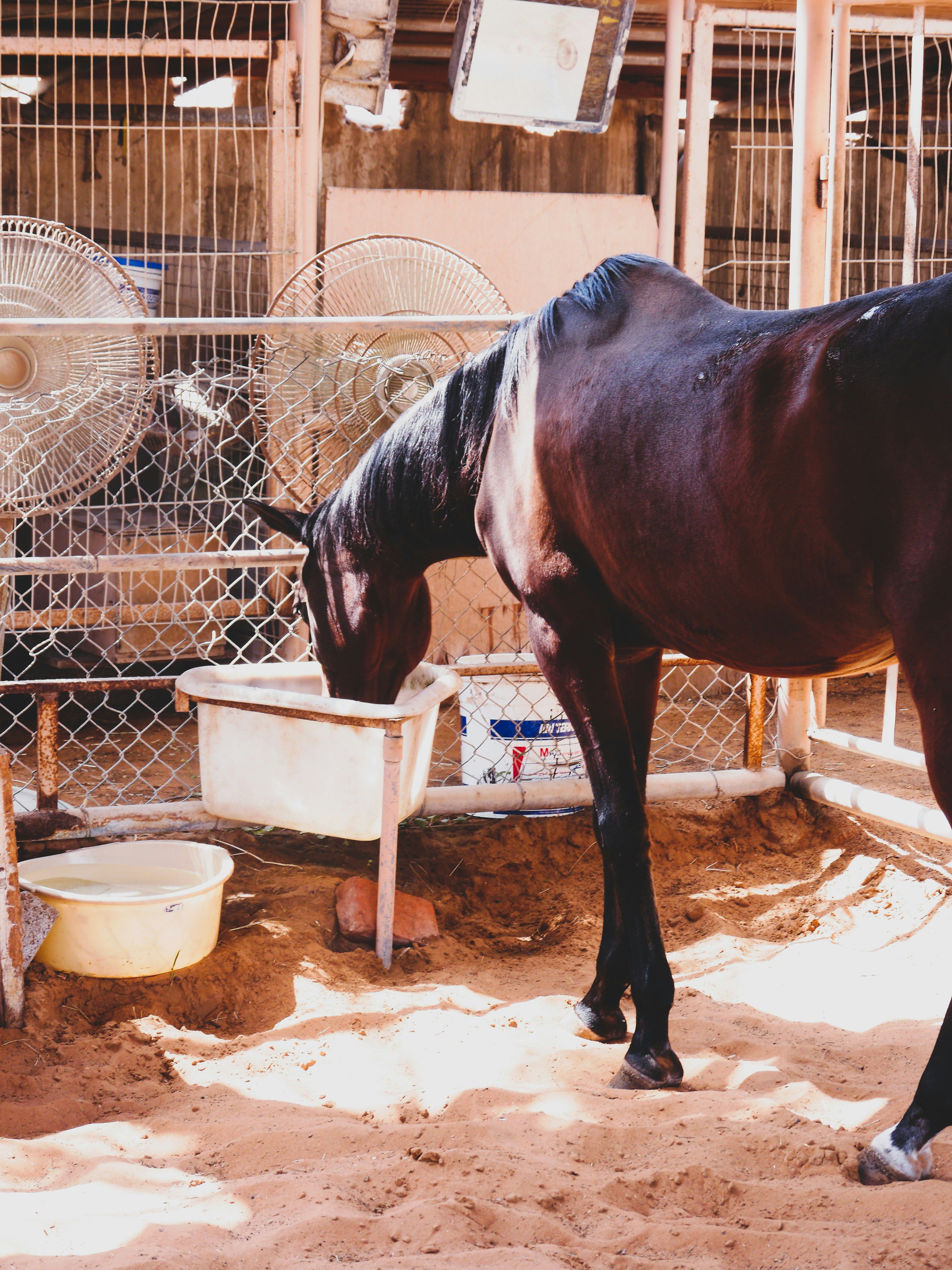
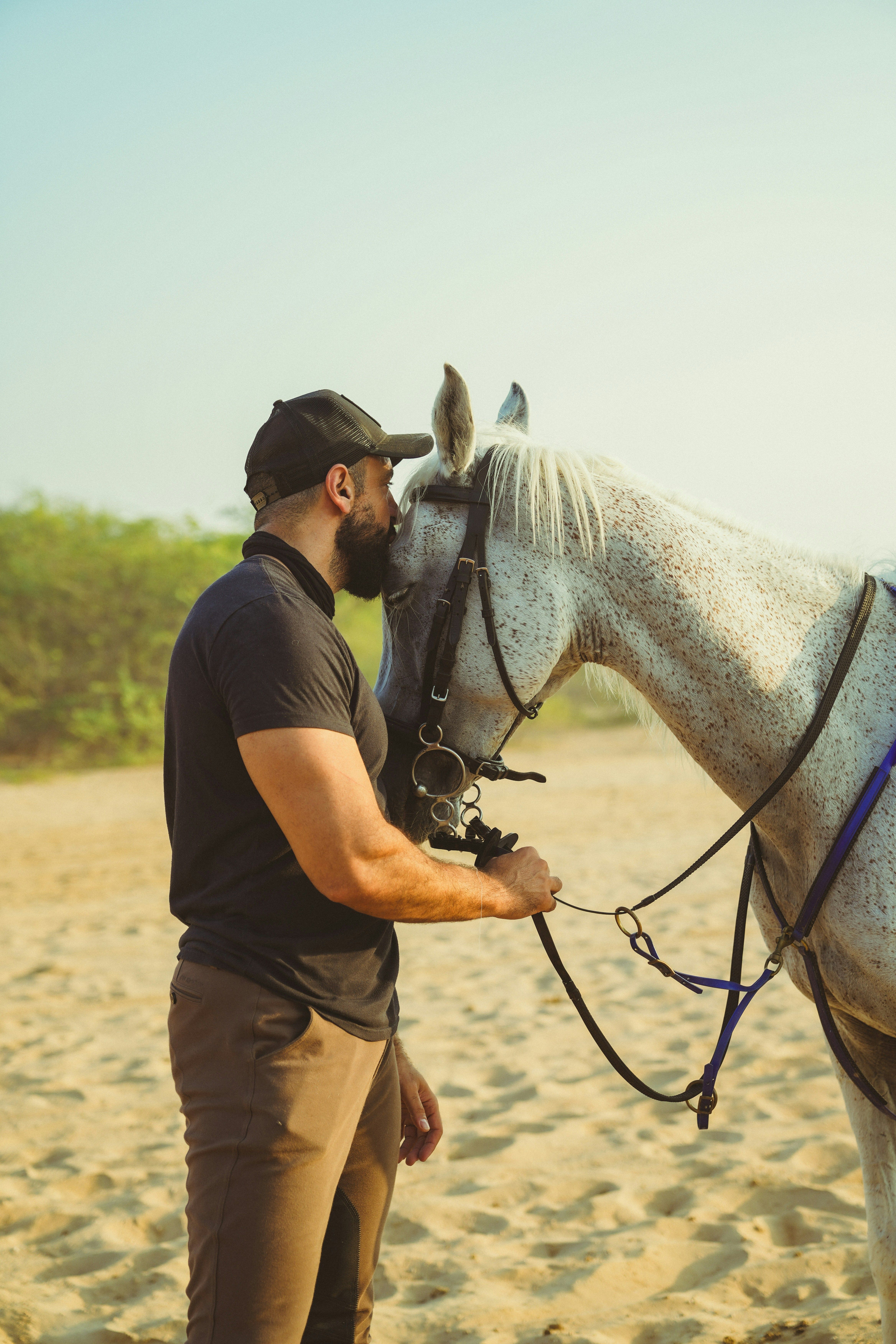
Photos: Anastase Maragos, Salman Sidheek, Joe Pearson
What else is needed?
But when it comes to keeping a horse, there are three extra things that quietly — but consistently — add to your monthly budget. And here they are.
- Farrier service (trimming and shoeing).
- Veterinary care.
But here is where it gets tricky: unexpected illness. A single vet visit costs 300–600 AED, and if you don’t have insurance, things can escalate very quickly — an average surgery can easily reach 40,000–50,000 AED.
Interesting fact: There is Third-Party Liability insurance for horses. If your horse injures someone or causes damage — say, nudging a Porsche or a Ferrari while being walked back to its stable (not as far-fetched as it sounds, given the car parks at some UAE yards) — this policy covers the legal liability.
- Training and lessons.
Total: Your average monthly costs for a horse in the UAE
The most basic monthly option
- Private stable rental — 1,500 AED
- Feeding (handled by you) — 800 AED
- Horse staff exercise — 500 AED
- Group training once a week — 150 AED
- Vaccinations and dental care (averaged monthly) — 100 AED
- Trimming (averaged monthly) — 150 AED
- Shoeing (averaged monthly) — 400 AED
- Total: 4,050 AED per month
A more comfortable, full-service monthly setup
- Commercial stable rental (feeding included) — 4,000 AED
- Private trainings for you and your horse — 2,000 AED
- Vaccinations and dental care (averaged monthly) — 100 AED
- Joint supplements and other extras — 200 AED
- Trimming (averaged monthly) — 150 AED
- Shoeing (averaged monthly) — 400 AED
- Total: 6,850 AED per month
More from
DubaiAnimals
Owning a Falcon In the UAE: What Is It Really Like?
Who buys falcons in the UAE — and why? Cultural and economic reasons
by Barbara Yakimchuk
21 Aug 2025
Saudi ArabiaAnimals
His First Dictionary, His Compass. The Life Of a Camel Herder
The story of how camels shaped a man’s soul and the way he saw the world
by Alexandra Mansilla
10 Aug 2025

PhotographyInterview
Saleh Althobaiti, The Photographer: ‘Behind The Silence Of Camels Lie Stories’
The story of a photographer who lived surrounded by camels — and sees what others don’t
by Alexandra Mansilla
18 Jun 2025

Animals
Top 10 Animals To Spot On Safari This Summer
Dreaming of a summer safari? Discover the top 10 animals to spot, from majestic elephants to elusive leopards
by Iffat Nawaz
14 Jun 2025

AnimalsPeople
Birdwatchers: Why Do People Passionately Observe Birds?
And is birdwatching only about binoculars and notebooks?
by Alexandra Mansilla
12 Jun 2025

Animals
How To Take Your Dog To the Beach
Essential tips on how to do a beach day properly (and responsibly)
by Sana Bun
3 May 2025